

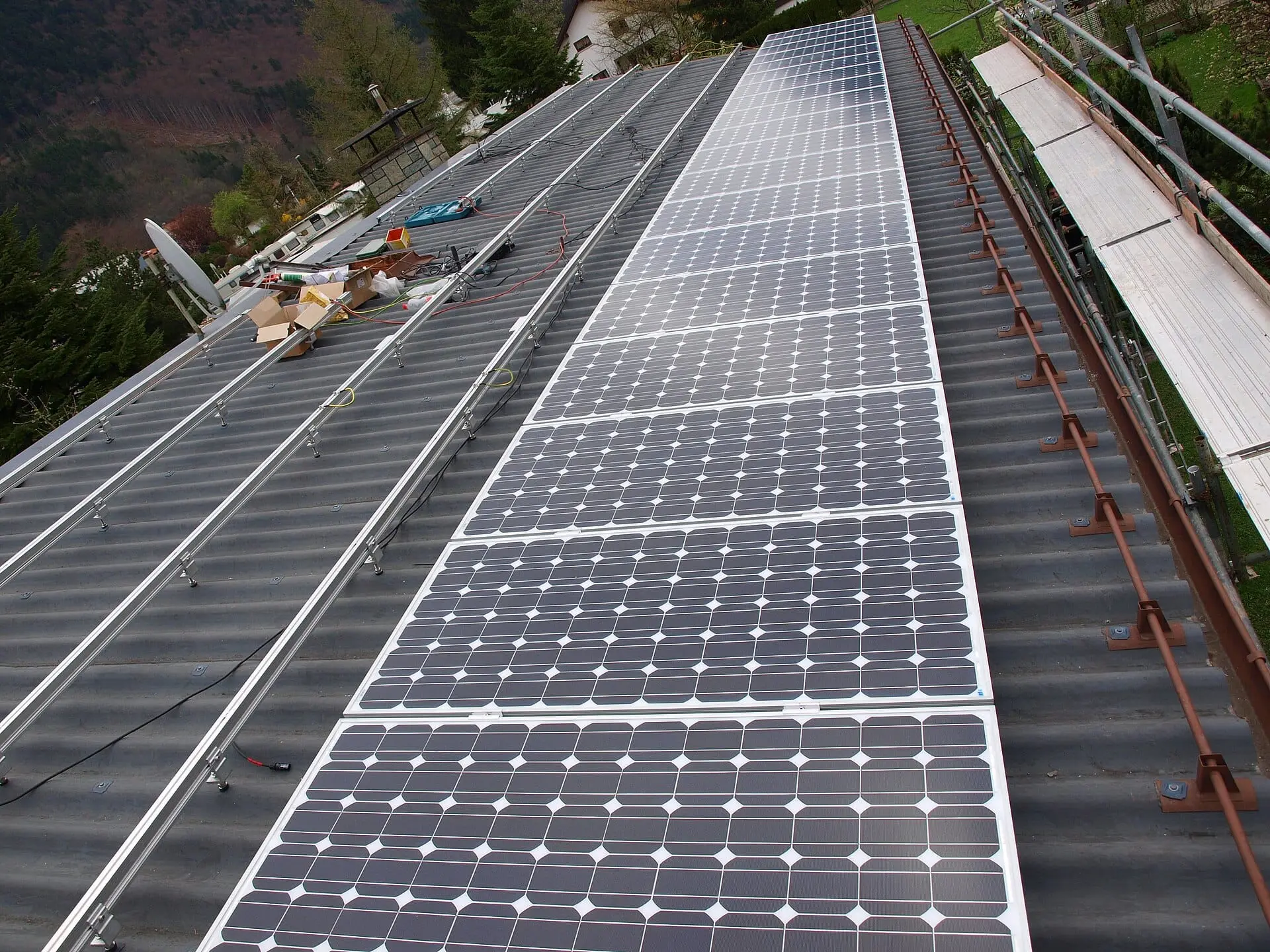
“How many panels fit on my roof?” and “How many panels do I need to cover my consumption?” are not the same question. The first is about physical layout; the second is about energy demand. A useful preliminary solar assessment answers the two separately and compares the results.
A large roof alone does not determine the right system size. The facility’s consumption, usage hours, layout conditions and electrical infrastructure should be considered together. This way it becomes clear which need the project will meet, rather than just a total number of panels.
From gross roof area to usable area
Chimneys, skylights, mechanical equipment and walkways on the roof affect the layout. The structure, mounting conditions and weather loads are also part of the technical assessment. Panels fitting on the ground or roof does not by itself show that they are structurally suitable. U.S. Department of Energy — Structural and site assessment in PV installation (opens in a new tab)
In an example preliminary calculation, take a net layout area of 180 m² and a physical panel area of 2.6 m². Simple division gives 69 panels. This is only an area-based rough upper limit. Because of actual panel dimensions, roof geometry, orientation, row spacing and walkways, the feasible number may be lower.
For this reason, assumptions should be stated explicitly instead of single-factor statements such as “a 100 m² roof always takes this many kW”. Without panel width and length, a definite layout should not be presented as if it had been made.
From panel count to installed power
Total DC installed power is calculated with this simple relationship:
Installed power (kWp) = Number of panels × Panel power (Wp) / 1,000
If each of the 69 panels in the example is 550 Wp, the total is 37.95 kWp. This panel power is an example input; it is not a product recommendation. Wp is the panel’s rated power under specified standard test conditions. It does not mean the system will produce that power at every moment.
The inverter’s AC rated power is assessed separately. Presenting DC panel power and AC inverter power as the same number blurs the structure of the system. The inverter converts the direct current produced by the panels into alternating current and plays a key role in how the system operates. U.S. Department of Energy — What inverters do (opens in a new tab)
The difference between kWp and kWh
kWp is a measure of installed power; kWh is the energy produced or consumed over a period. The same installed power can deliver different annual yields under different locations and layout conditions. Tools such as PVGIS provide long-term yield estimates from location and system inputs. Monthly and hourly data allow a more detailed assessment than a single annual total. European Commission JRC — Using PVGIS (opens in a new tab)
Just to illustrate the calculation, assume a specific yield of 1,500 kWh/kWp per year. For 37.95 kWp, the annual energy is 56,925 kWh. This figure is not an actual PVGIS result for İzmir; it is an arithmetic example. A real calculation should use location, tilt, orientation, losses and shading.
Is it enough if annual yield covers annual consumption?
Annual yield equal to annual consumption does not mean that consumption is covered by solar every hour. Generation happens during the day while important loads may run at night. For this reason, a preliminary assessment file should include the hourly load profile, if possible, alongside monthly consumption.
When comparing quotations, you can ask for panel count, DC power, inverter AC power, yield assumptions and calculation scope to be shown in the same table. This makes it clear why different calculations give different results.
After installation, performance records and a maintenance plan should also be followed. Considering maintenance and operation from the start makes it easier to evaluate the system over its life cycle. U.S. Department of Energy — PV operation and maintenance (opens in a new tab)
When preparing for a rooftop solar assessment, gather your roof dimensions, consumption records and information about your existing electrical infrastructure. To discuss your facility’s electrical needs, you can reach us through our contact page.